

Lettering hammers
For lettering, fine contours and sculptural details in stone. Compact lettering hammers support controlled work with suitable chisels.
Example models FK 700 · FK 701 · FK 701 A
Models & specifications ↗F+K / Pneumatic tools
Pneumatic tools for stoneworking, industry and construction: explore the tool groups and their applications. Find models, specifications and matching spare parts in the shop.
Wuppertal
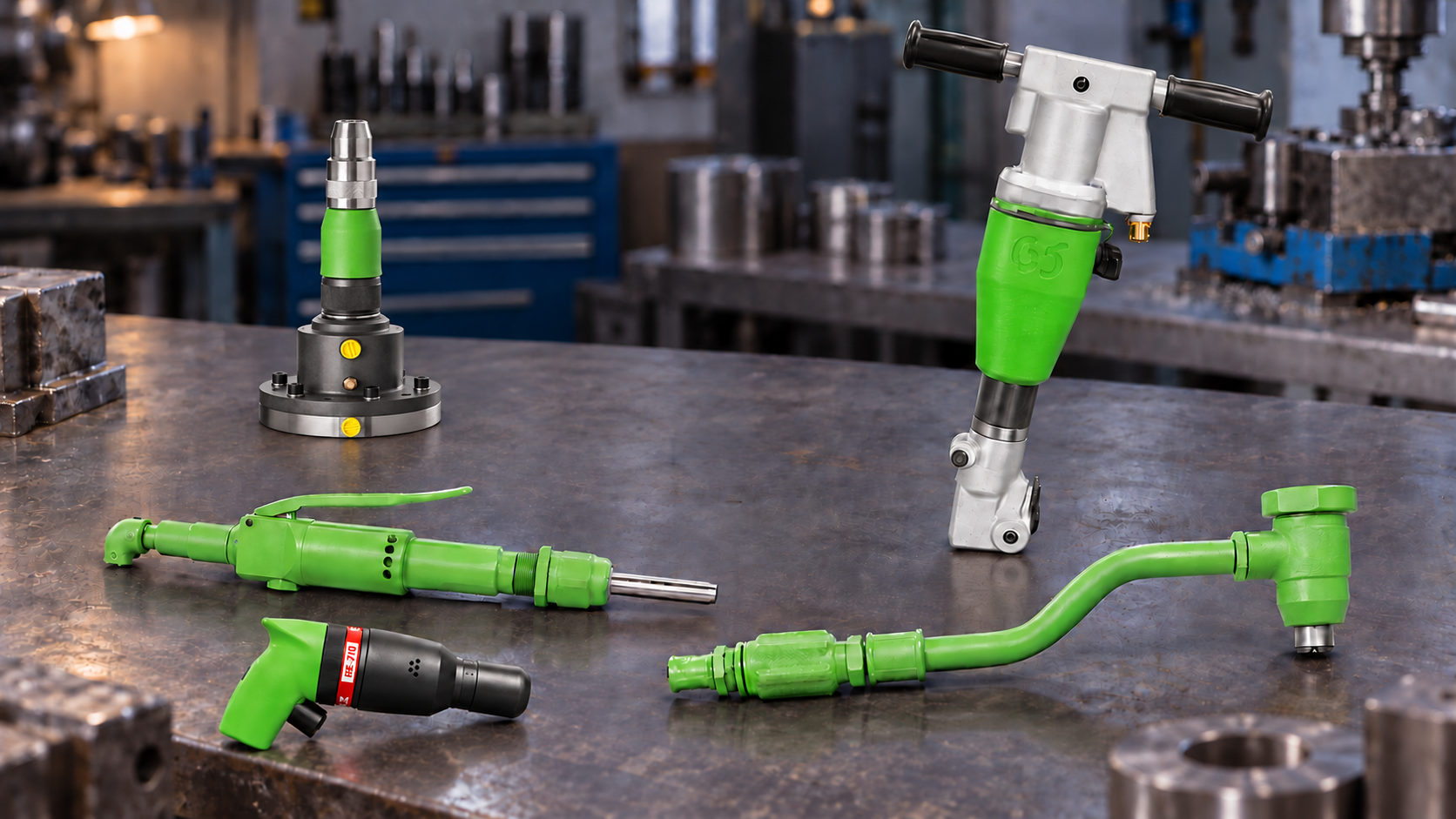
Our pneumatic hammers were developed in Wuppertal and are continuously refined. We draw on the extensive expertise of our employees and their many years of experience in their respective fields. Close collaboration between development, manufacturing and assembly allows us to apply this knowledge directly to the ongoing development of our tools.
From turning, grinding and milling to metal fabrication and final assembly, we manufacture our hammers entirely in-house, apart from castings and plastic parts. At every stage, experienced employees contribute their craftsmanship and detailed knowledge of our tools. This brings the manufacturing and assembly of our hammers together at a single location.
Tools
For lettering, fine contours and sculptural details in stone. Compact lettering hammers support controlled work with suitable chisels.
Example models FK 700 · FK 701 · FK 701 A
Models & specifications ↗
For professional stoneworking: removing material, working surfaces and shaping stone. Different weight classes allow selection to suit the task.
Example models FK 702 · FK 703 · FK 703 G
Models & specifications ↗Tools

Compact chipping hammers for lighter chiselling work in workshops, industry and construction. Select by design, weight and tool shank.
Example models FK 101 · FK 111 · FK 102
Models & specifications ↗
For heavier chiselling, including cleaning castings, breaking and material removal. Select according to the material and task.
Example models FK 2 · FK 3 · FK 4
Models & specifications ↗
For driving and removing rivets and shearing rivet heads. Matching rivet holders complement the tools.
Example models FK 120 · FK 141
Models & specifications ↗
For engraving and marking different materials. Replaceable needles allow adaptation to the engraving task.
Models & specifications ↗
For light to heavy compacting work. Different weight classes and matching rammer feet allow selection for each application.
Models & specifications ↗
For removing rust and old coatings and roughening surfaces. Choose the working tool for the surface and desired finish.
Models & specifications ↗
For removing rust, scale, slag and coatings. Moving needles support work on irregular surfaces.
Models & specifications ↗
For centre punching, centring and marking. A specialised pneumatic tool for targeted marks in metalworking.
Models & specifications ↗
Straight and angle grinders for industrial work. Design, speed and tool holder determine the right model for the task.
Models & specifications ↗Tools

Handy pneumatic hammers for breaking and chiselling in construction and industry. For tasks where manoeuvrability and tool weight matter.
Example models FK 2 · FK 3 · FK 4
Models & specifications ↗
For demanding breaking and demolition work, for example in roadworks and construction. Different versions cover different tasks.
Example models FK 2008 R · FK 2012 R · FK 2015 R
Models & specifications ↗Tools
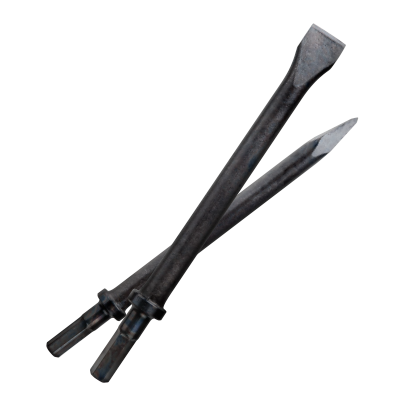
Chisels, accessories and rammer feet complement the range. Choose the shank and version to match the pneumatic tool.
Example models FK 101
Models & specifications ↗
For integration into machinery and industrial processes. Different knocking-unit designs allow adaptation to the installation and task.
Example models KE 702 D · KE 605 · KE 641
Models & specifications ↗F+K / Handles & construction
The handle shape influences how a pneumatic tool is held, positioned and guided. The appropriate design depends on the working position, the task and the weight of the tool.
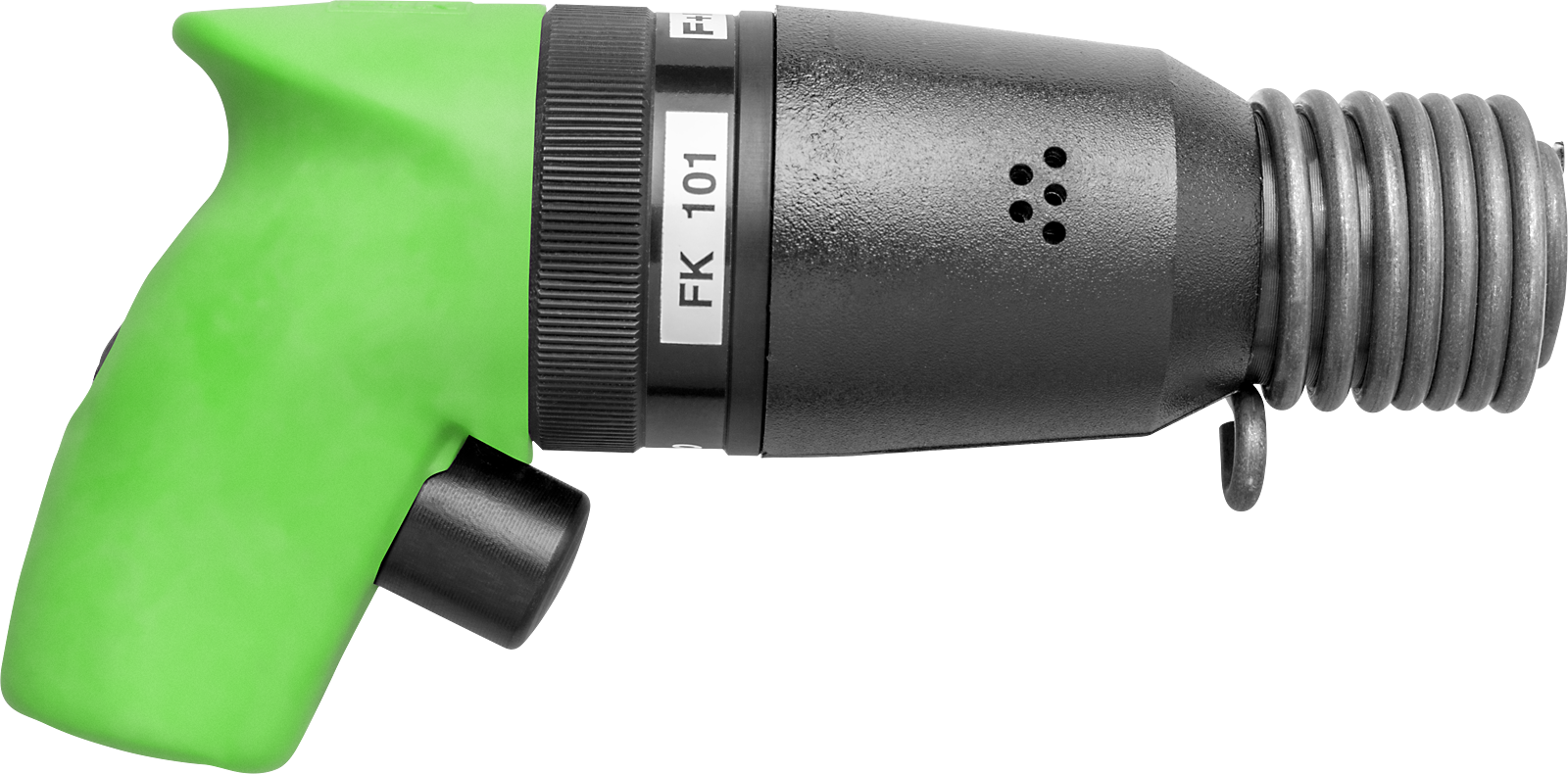
The angled grip allows the tool to be held and operated with the same hand. It helps with precise positioning and alignment.
Shown: FK 101.1 ↗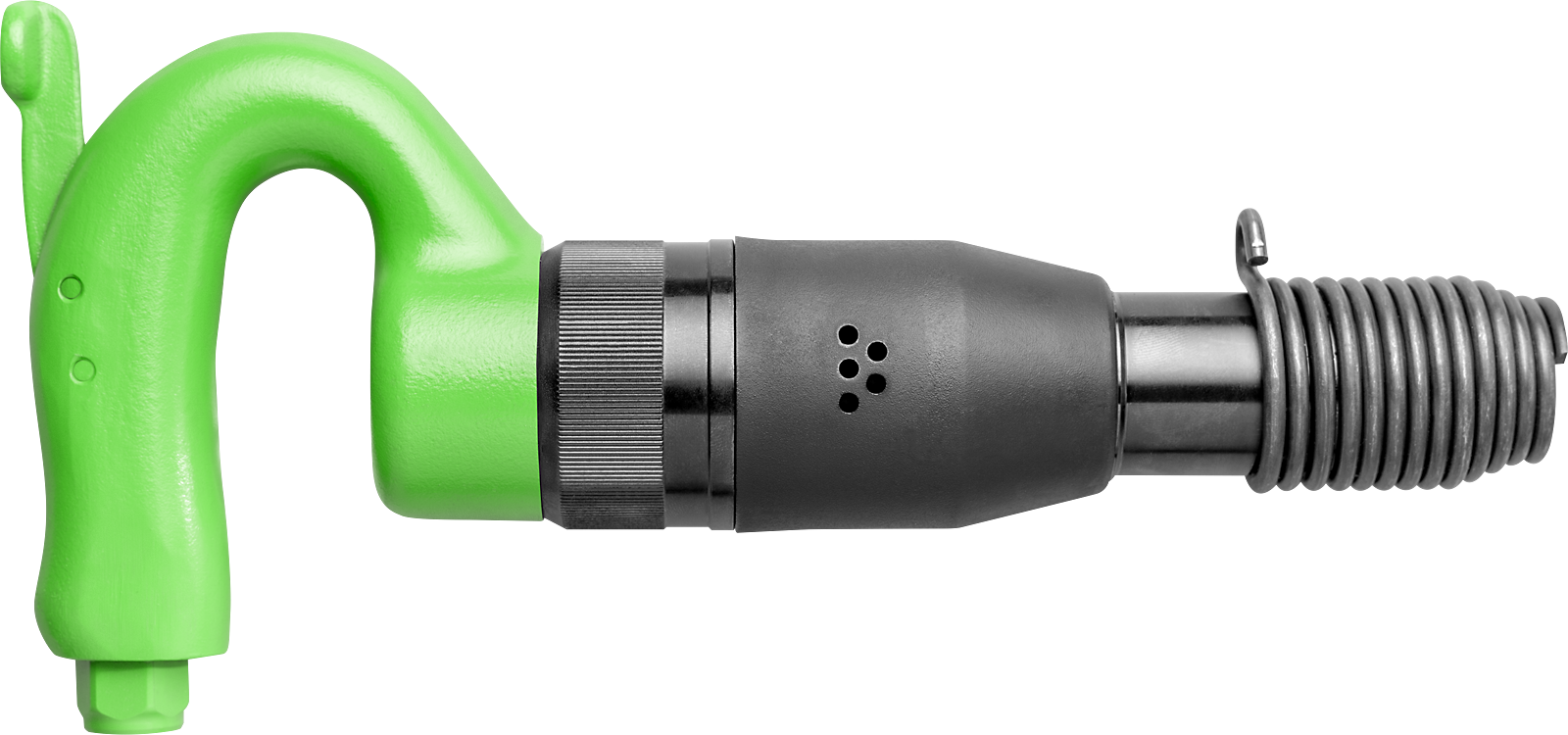
The handle is open at the bottom, providing easy access and allowing the operator to reposition their grip as the working position changes.
Shown: FK 102.4 ↗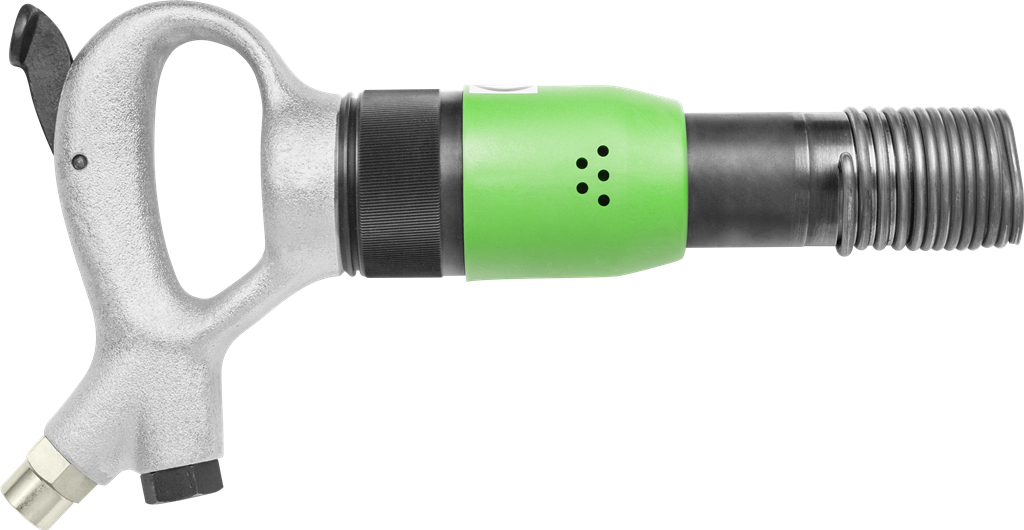
The closed bow allows a firm grasp of the handle. It supports controlled guidance when positioning the tool and during work.
Shown: FK 3.3 ↗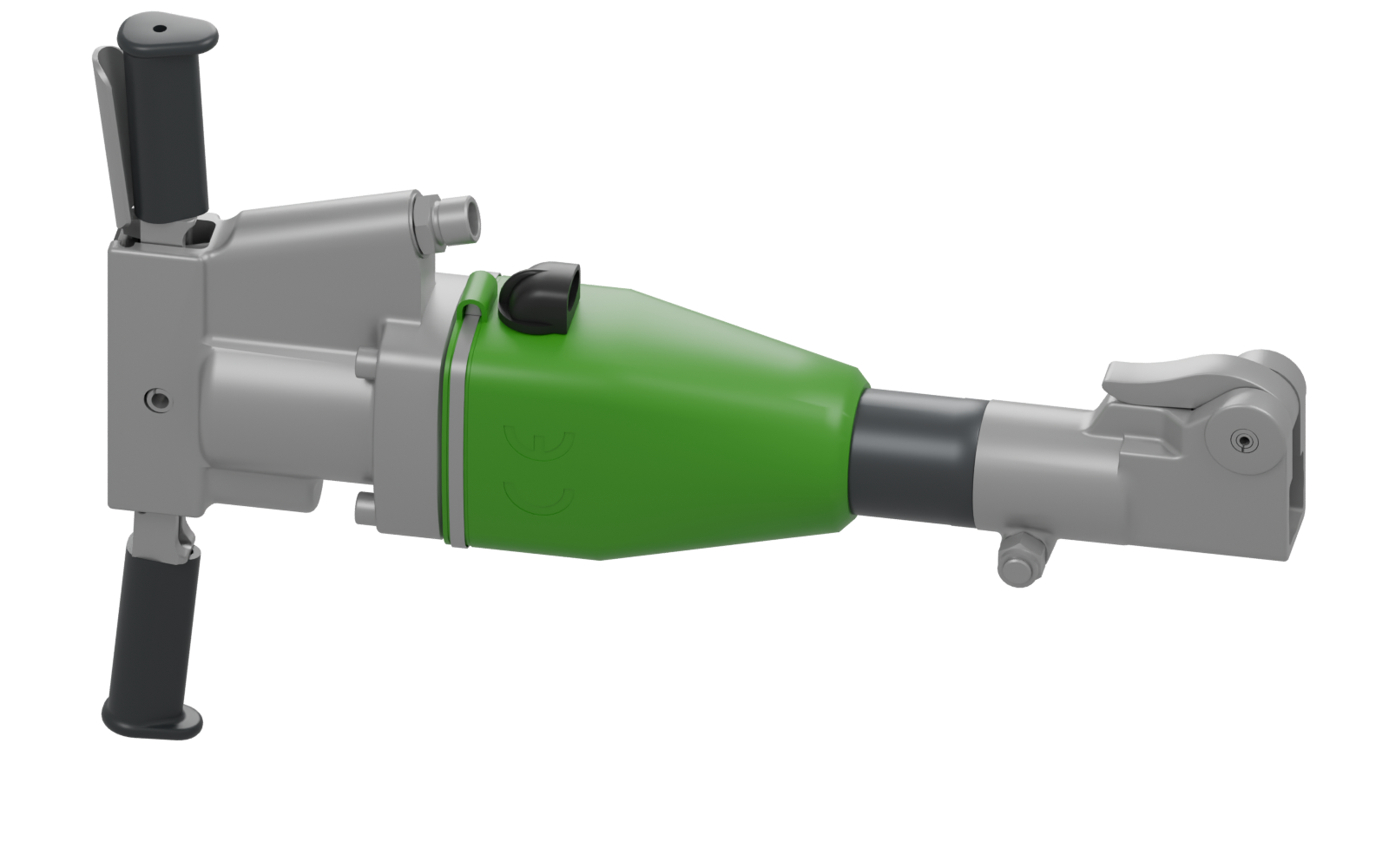
Two side handles allow the hammer to be held and guided with both hands. This arrangement is particularly suited to larger hammers and predominantly vertical work.
Shown: FK 2020 R.64 ↗Compressed air drives the impact piston. An automatic valve controls the repeated impact cycle. The FK 3 G cutaway illustrates the basic principle; handle design, valve type and tool retention vary by model.
The handle is used to hold and guide the tool. The inlet valve admits compressed air when the control is pressed and closes when it is released.
The trigger or lever switches the hammer on and off. Its design depends on the handle type.
Connects the tool to the compressed air supply. Connection size and air requirements depend on the model.
On vibration-damped versions, the handle is spring-mounted relative to the percussion mechanism. This reduces vibration transmitted to the hands.
A plate valve or tubular slide valve distributes the air to control the piston’s forward and return strokes. A tubular slide valve is shown.
Reduces the noise of the exhaust air. Its shape and position vary between tools.
Moves back and forth inside the cylinder and transfers impact energy to the inserted tool when it strikes.
Guides the impact piston and forms its working chamber. Together with the valve, it enables the repeated impact cycle.
Guides the matching shank and supports the tool laterally while allowing movement in the impact direction.
Retains the inserted tool while allowing axial movement. Designs include spring and screw-on retainers; a screw-on retainer is shown.
Elastic rings cushion the impact of the tool collar against the retainer. Their design and number depend on the model.
Transfers the impacts to the workpiece. Chisels, rivet sets or other inserts are selected to suit the task and tool socket.
The illustrations show example configurations. Follow the instructions for the individual tool regarding operation and designated gripping points.
Most of our handheld tools can be tested at your premises, directly in your application. Contact us to select a suitable tool and arrange a test.
Enquire about a tool test ↗