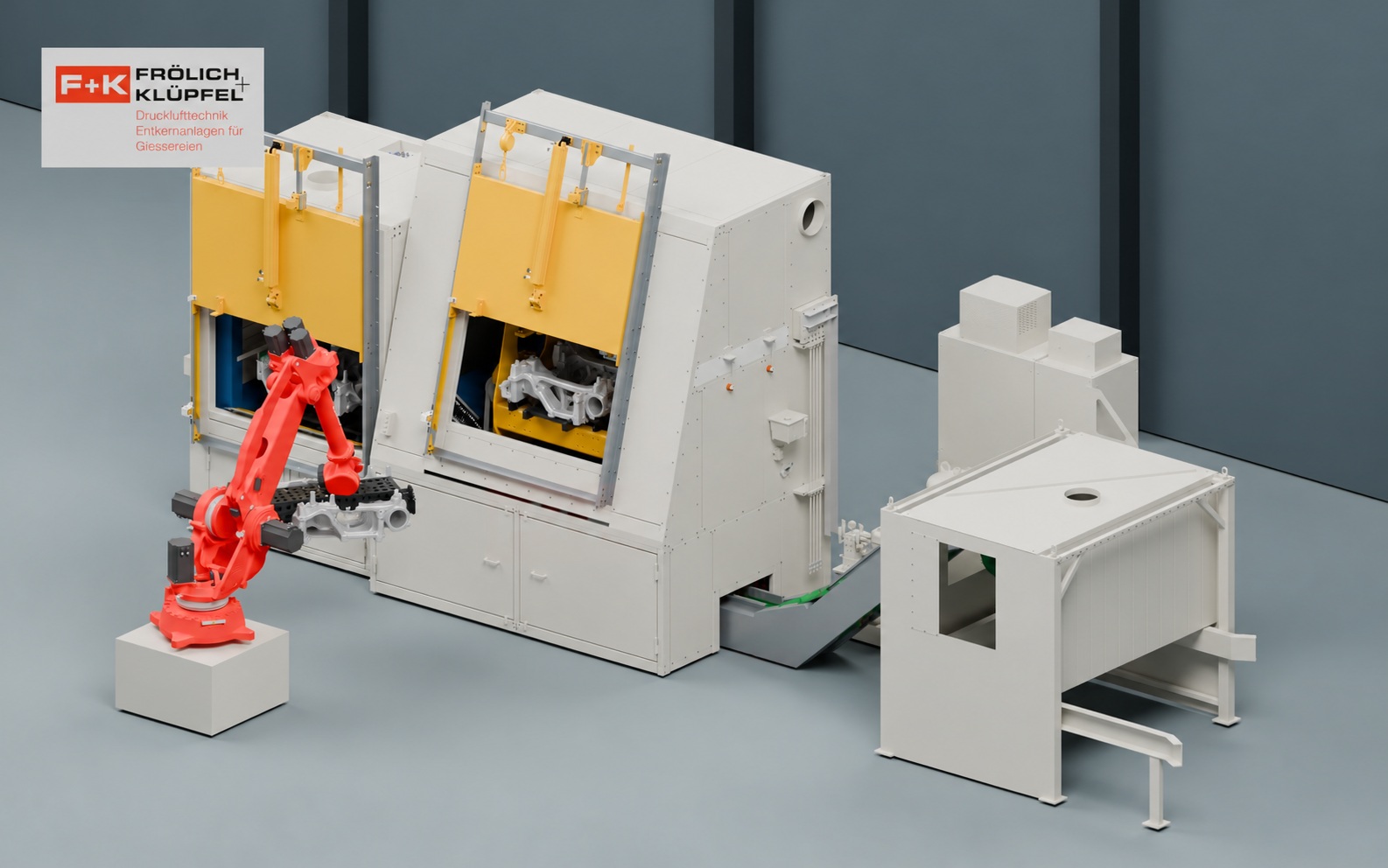
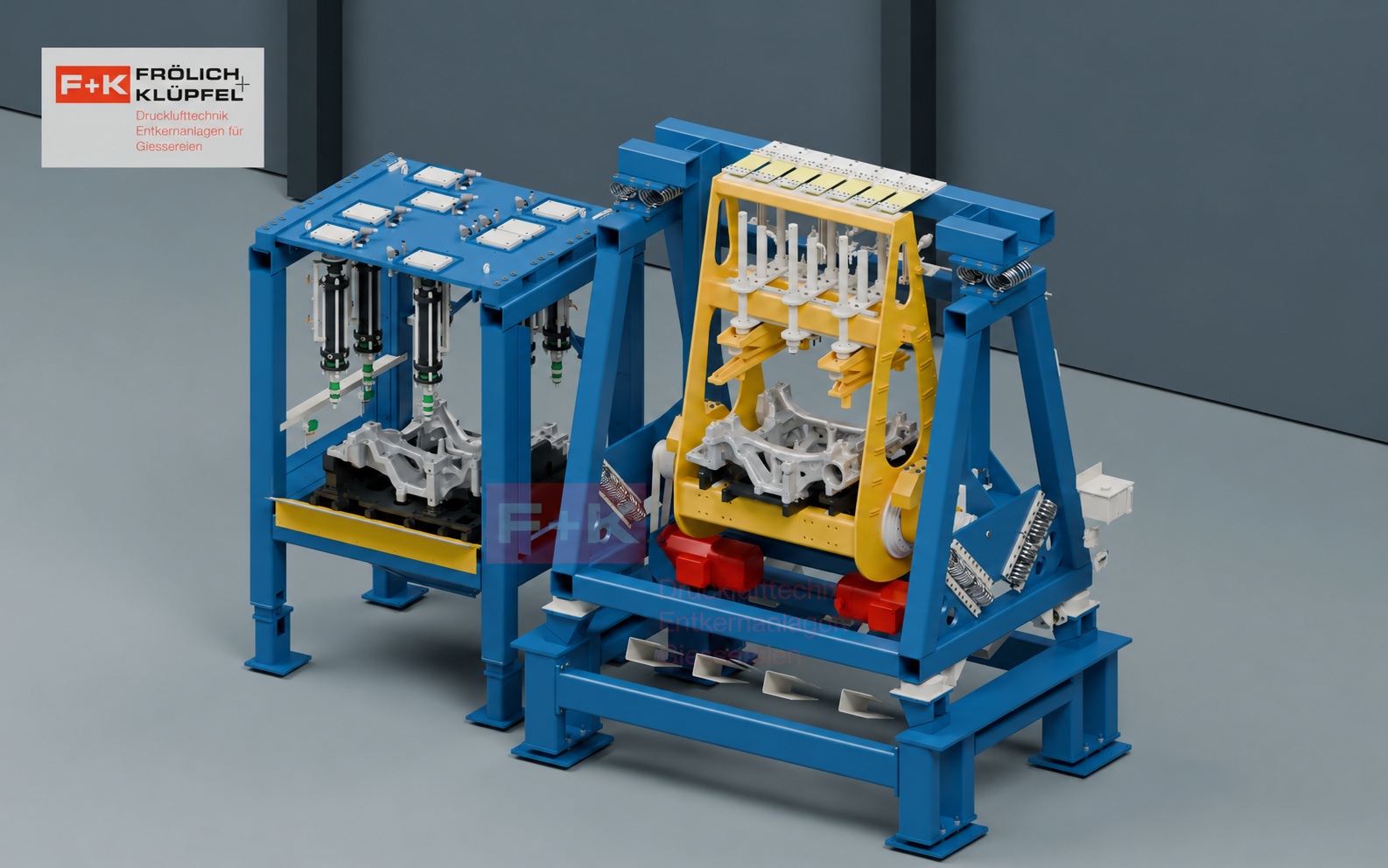
In a combined hammering station and Vibra system, F+K hammering units first break the sand core in the clamped casting. The Vibra then provides additional vibration treatment. Alternatively, the vibration machine can be equipped with integrated hammering units.
Vibration from an eccentric drive
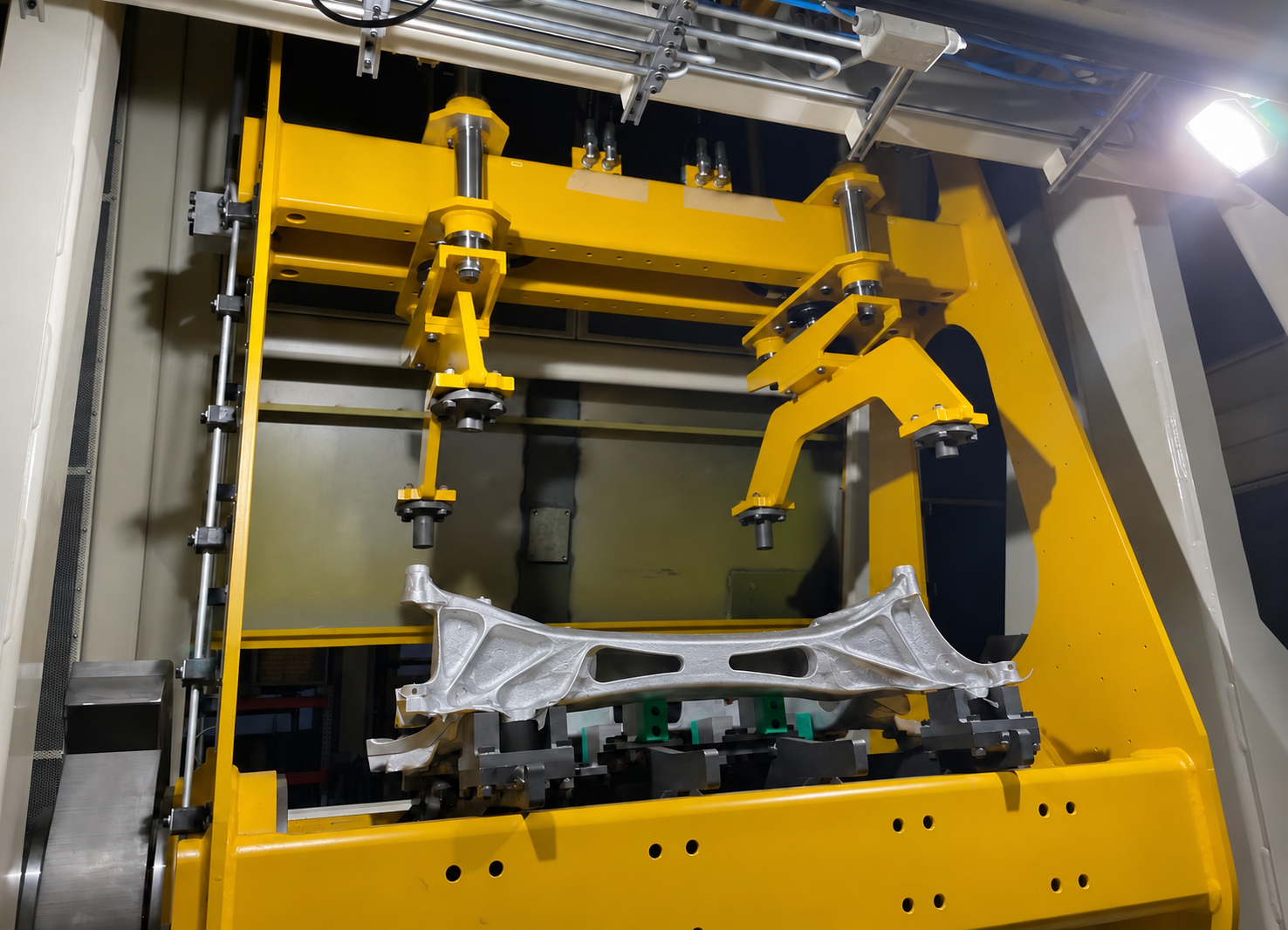
Two servo-controlled three-phase motors drive an eccentric shaft and set the machine in vibration. This accelerates the clamped casting in two directions. The additional motion helps release and discharge core sand.
Hold the casting in a dedicated fixture
A fixture designed for the casting holds the workpiece during vibration treatment. Interchangeable fixtures allow adaptation to different castings. For thin-walled aluminium components in particular, the fixture and process are designed together.
Discharge sand from the casting
Breaking the core and emptying the casting are separate tasks: once the core is broken, loose sand must also leave the cavities. This is where the Vibra complements the hammering station. In the robot cell shown, a sand conveyor removes the discharged sand.
Connect the stations with a robot
In the standard arrangement shown, the robot handles castings between the hammering station and the Vibra. Typical workpieces are complex, thin-walled aluminium chassis components. Manually loaded versions are also possible alongside robot loading.
Match the process to the task
The choice between a separate hammering station and integrated hammering units depends on the casting and production flow. Fixture, vibration sequence and sand discharge are matched through decoring trials. The Vibra can decore castings weighing up to 400 kg. Machine size and performance specifications are defined for the particular task.
Vibration systems
For thin-walled, complex aluminium castings.
The combination of a hammering station and Vibra is a typical standard arrangement for decoring thin-walled, complex aluminium castings. Chassis components are among the most common applications. Robotic loading connects the two processing stations.
Example arrangement of hammering station and Vibra with robotic loading and sand conveyor.View of the mechanisms +View of the mechanisms with aluminium chassis castings; acoustic enclosures are hidden.
Vibration systems
Decoring technology in action
Example configurations from the F+K image archive. Design, loading and equipment are specified for each project.
The video shows the smallest version of our Vibra machines in operation. We now offer machines up to 1,600 mm wide.
LET’S TALK ABOUT YOUR APPLICATION
Your decoring application
The following information helps us prepare for our first discussion: